The Cruciate Ligaments Of The Knee - Posterior Cruciate Ligament Tear Encinitas Pcl Reconstruction Carlsbad Pcl Injuries Oceanside - Anterior cruciate ligament (acl) injury your acl connects the inside of the top of your tibia (shinbone) to the outside bottom of your femur (thighbone) in the front of the knee.
The Cruciate Ligaments Of The Knee - Posterior Cruciate Ligament Tear Encinitas Pcl Reconstruction Carlsbad Pcl Injuries Oceanside - Anterior cruciate ligament (acl) injury your acl connects the inside of the top of your tibia (shinbone) to the outside bottom of your femur (thighbone) in the front of the knee.. It connects the thigh bone to the shin bone. They cross each other to form an x with the anterior cruciate ligament in front and the posterior cruciate ligament in back. This is known as the varus stress. It is responsible for stopping the shinbone from sliding in front of your thighbone and for controlling the rotation of your knee. A distinct anteromedial band (amb) and a main posterolateral part.
The acl is a key structure in the knee joint, as it resists anterior tibial translation and rotational loads. These represent the femoral attachment of the cruciate ligaments. The anterior cruciate ligament is one of the four main ligaments of the knee, providing 85% of the restraining force to anterior tibial displacement at 30 degrees and 90 degrees of knee flexion. They are important stabilizers of the knee. The anterior and posterior cruciate ligaments form an x in the center of the knee.
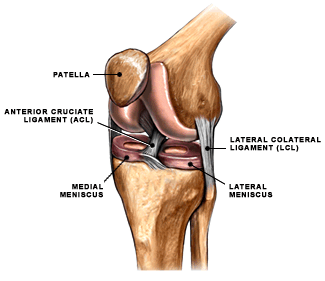
Anterior cruciate ligament (acl) is the most commonly injured knee ligament.
The anterior cruciate ligament (acl) is a band of dense connective tissue which courses from the femur to the tibia. This stabilizes the knee joint. Usually, there will be little or no swelling. The ligament can rupture completely (complete cruciate tear) or partially (partial cruciate tear.) the complete tear is also called an acl or ccl tear, a ruptured cruciate is a painful and immobilizing injury. If you tear the anterior cruciate ligament (acl) in your knee, you may need to have reconstructive surgery. The ligament, located in the back of the knee, that controls backward movement of the tibia (shin bone). The cruciate ligaments control the back and forth motion of your knee. It connects the thigh bone to the shin bone. There are two cruciate ligaments, anterior (acl) and posterior (pcl). Cruciate knee ligaments the cruciates are the most important knee ligaments in providing stability of the knee. The anterior cruciate ligament runs diagonally in the middle of the knee. This will help us to remember the orientation of the anterior cruciate ligament (acl) and posterior cruciate ligament (pcl) of knee. It runs diagonally through the inside of the knee and gives the knee joint stability.
When the knee is bent to 30 degrees and force applied to the inside of the knee which puts the ligament under stress, pain is felt but there is no joint laxity. They are important stabilizers of the knee. Posterior cruciate ligament (pcl) also links the thigh bone to the shin. Your knee can buckle and cause pain. Cruciate knee ligaments the cruciates are the most important knee ligaments in providing stability of the knee.
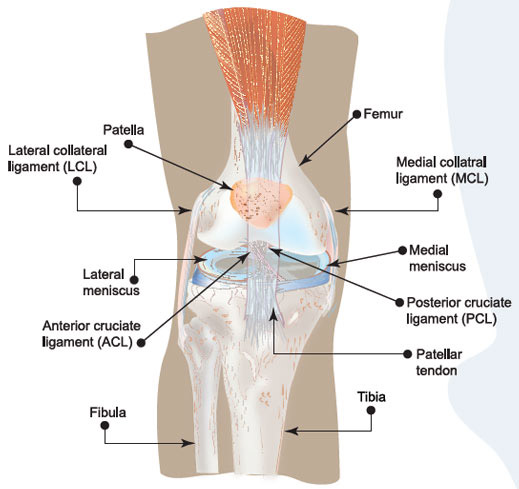
These represent the femoral attachment of the cruciate ligaments.
These represent the femoral attachment of the cruciate ligaments. The acl is a key structure in the knee joint, as it resists anterior tibial translation and rotational loads. This knee ligament runs diagonally through the center of the knee and supports and stabilizes the meeting place of the tibia, femur, and patella (the kneecap). Usually, there will be little or no swelling. The ligament, located in the center of the knee, that controls rotation and forward movement of the tibia (shin bone). Posterior cruciate ligament (pcl) also links the thigh bone to the shin. Cruciate ligaments these are found inside your knee joint. The posterior cruciate ligament (pcl) is a ligament within the knee. Suddenly slowing down and changing direction (cutting) pivoting with your foot firmly planted The acl is the most injured ligament of the four located in the knee. The ligaments connect the femur (thigh bone) to the tibia (shin bone). A) tend to run parallel to one another b) are also called collateral ligaments c) prevent hyperextension of the knee d) assist in defining the range of motion of the leg c) prevent hyperextension of the knee articular cartilage found at the ends of the long bones serves to _____. There are two cruciate ligaments, anterior (acl) and posterior (pcl).
Suddenly slowing down and changing direction (cutting) pivoting with your foot firmly planted They make the joint stable and yet are configured in such a way as to allow for more than 90 degrees of flexion of the knee. These ligaments are two strong, rounded bands that extend from the head of the tibia to the intercondyloid notch of the femur. The anatomical and functional details of the cruciate ligamants of the knee were studied on 20 cadaver knees and 24 fresh knees. Anterior and posterior cruciate ligaments are important to the stability of the knee joint.
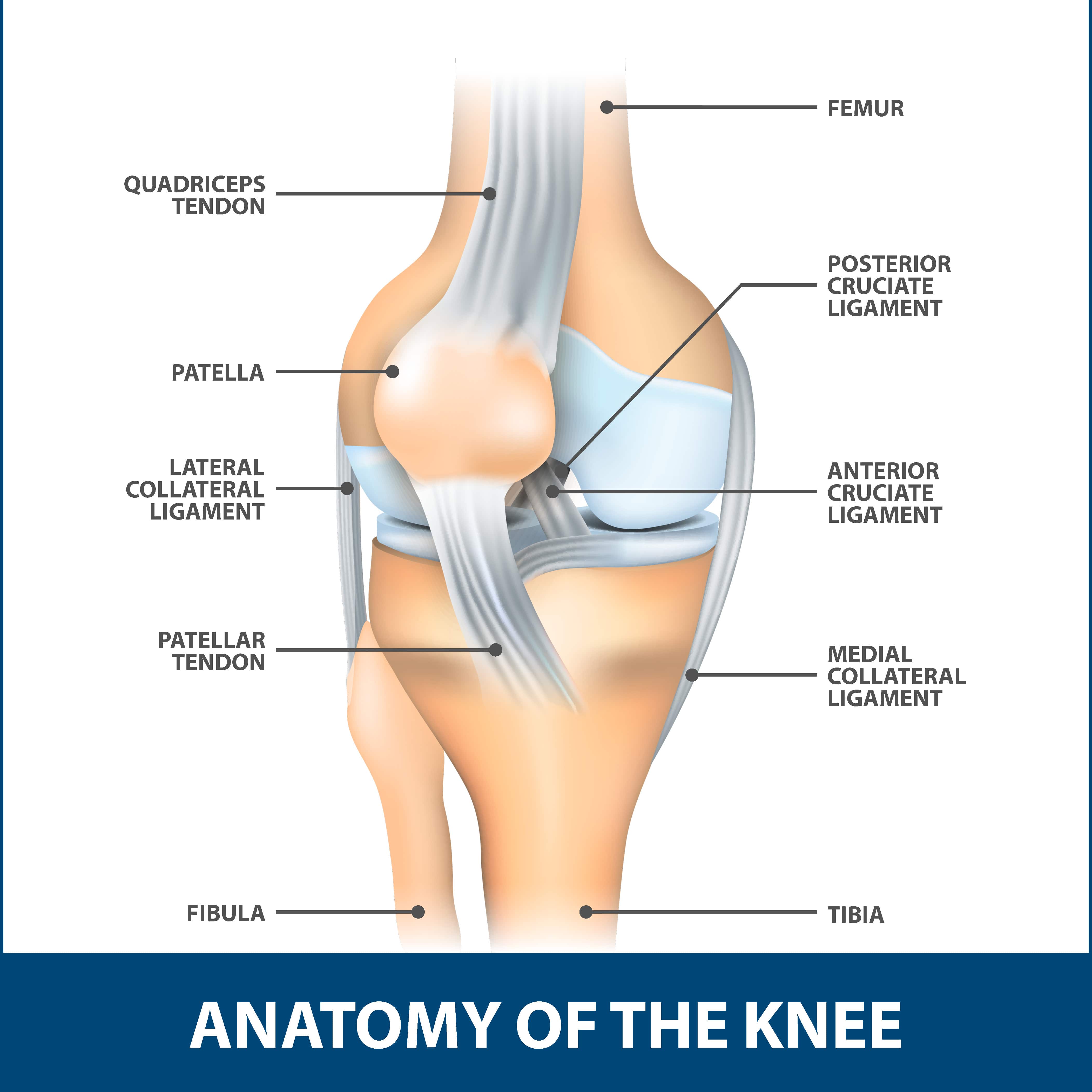
The anterior cruciate ligament runs diagonally in the middle of the knee.
This will help us to remember the orientation of the anterior cruciate ligament (acl) and posterior cruciate ligament (pcl) of knee. This knee ligament runs diagonally through the center of the knee and supports and stabilizes the meeting place of the tibia, femur, and patella (the kneecap). The cruciate ligaments of the knee _____. It runs diagonally through the inside of the knee and gives the knee joint stability. Anterior cruciate ligament (acl) injury your acl connects the inside of the top of your tibia (shinbone) to the outside bottom of your femur (thighbone) in the front of the knee. The cruciate ligaments of the knee are the anterior cruciate ligament (acl) and the posterior cruciate ligament (pcl). The anterior and posterior cruciate ligaments form an x in the center of the knee. The anterior cruciate ligament (acl) is one of the 4 major ligaments of the knee. It prevents the tibia from sliding out in front of the femur, as well as provides rotational stability to the knee. The posterior cruciate ligament (pcl) is a ligament within the knee. The cruciate ligaments secure the stability in the knee in cooperation with other. The cruciate ligaments control the back and forth motion of your knee. The size of the femoral attachment of the alb is nearly twice the size of its tibial attachment[1].


Komentar
Posting Komentar